
How to Specify a Large-Capacity Round Plastic Pail
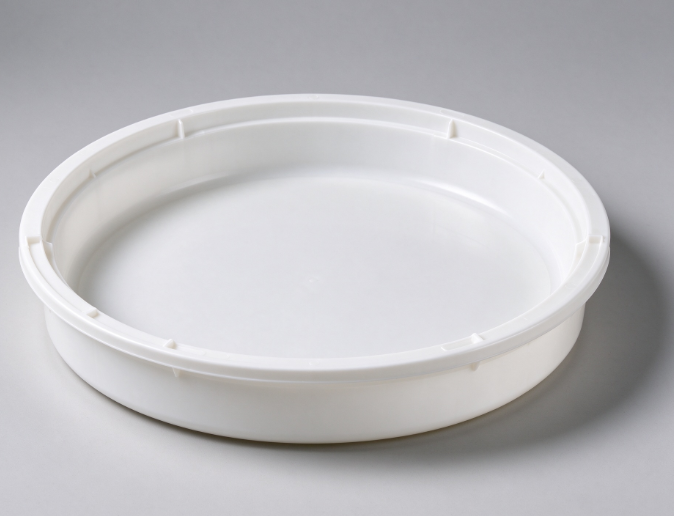
<p><span style="color: rgb(35, 43, 52); font-size: 10pt;">A Large-Capacity Round Plastic Pail should be selected around the product it will hold and the route it will travel. “Large capacity” is not a measurable specification by itself. Buyers need to distinguish nominal volume from brimful capacity and usable fill volume, then confirm the resin, lid, seal, handle, stacking conditions, and transport tests. These details matter whether the pail is intended for coatings, food ingredients, cleaning products, or another material; one pail design should not be assumed suitable for every contents type.</span></p><h1><span style="color: rgb(0, 0, 0); font-size: 14pt;"><strong>Define Capacity in a Way the Filling Line Can Use</strong></span></h1><p><span style="color: rgb(35, 43, 52); font-size: 10pt;">Ask the manufacturer to state capacity in litres and define whether it is nominal, brimful, or the recommended fill volume. The fill line must leave enough headspace for the product, temperature changes, mixing, and closure geometry. A pail filled to its brim can spill during lid application or transport, while an unnecessarily large headspace can waste freight and shelf space. The correct fill level depends on product expansion, viscosity, density, foaming, and how the container is closed.</span></p><p><span style="color: rgb(35, 43, 52); font-size: 10pt;">A simple conversion helps verify volume claims: 1 litre equals 1 cubic decimetre, or 1,000 cubic centimetres. If the product is water, 1 litre has a mass of approximately 1 kilogram near its maximum density; that approximation does not apply to paints, powders, oils, detergents, or food concentrates with different densities. Calculate the filled package mass as product volume multiplied by product density, then add the pail, lid, label, and handle. The filled mass affects manual handling, pallet loads, and whether a drop-test method is appropriate.</span></p><table style="min-width: 100px;"><colgroup><col style="min-width: 25px;"><col style="min-width: 25px;"><col style="min-width: 25px;"><col style="min-width: 25px;"></colgroup><tbody><tr><td colspan="1" rowspan="1"><p><span style="color: rgb(255, 255, 255); font-size: 7.5pt;"><strong>Capacity reference</strong></span></p></td><td colspan="1" rowspan="1"><p><span style="color: rgb(255, 255, 255); font-size: 7.5pt;"><strong>Equivalent volume</strong></span></p></td><td colspan="1" rowspan="1"><p><span style="color: rgb(255, 255, 255); font-size: 7.5pt;"><strong>Approximate water mass only</strong></span></p></td><td colspan="1" rowspan="1"><p><span style="color: rgb(255, 255, 255); font-size: 7.5pt;"><strong>What must still be confirmed</strong></span></p></td></tr><tr><td colspan="1" rowspan="1"><p><span style="color: rgb(35, 43, 52); font-size: 7.5pt;">20 L example</span></p></td><td colspan="1" rowspan="1"><p><span style="color: rgb(35, 43, 52); font-size: 7.5pt;">20 dm³ or 20,000 cm³</span></p></td><td colspan="1" rowspan="1"><p><span style="color: rgb(35, 43, 52); font-size: 7.5pt;">About 20 kg</span></p></td><td colspan="1" rowspan="1"><p><span style="color: rgb(35, 43, 52); font-size: 7.5pt;">Actual usable fill line, product density, and tare mass</span></p></td></tr><tr><td colspan="1" rowspan="1"><p><span style="color: rgb(35, 43, 52); font-size: 7.5pt;">25 L example</span></p></td><td colspan="1" rowspan="1"><p><span style="color: rgb(35, 43, 52); font-size: 7.5pt;">25 dm³ or 25,000 cm³</span></p></td><td colspan="1" rowspan="1"><p><span style="color: rgb(35, 43, 52); font-size: 7.5pt;">About 25 kg</span></p></td><td colspan="1" rowspan="1"><p><span style="color: rgb(35, 43, 52); font-size: 7.5pt;">Headspace, closure space, payload, and filled gross mass</span></p></td></tr><tr><td colspan="1" rowspan="1"><p><span style="color: rgb(35, 43, 52); font-size: 7.5pt;">50 L example</span></p></td><td colspan="1" rowspan="1"><p><span style="color: rgb(35, 43, 52); font-size: 7.5pt;">50 dm³ or 50,000 cm³</span></p></td><td colspan="1" rowspan="1"><p><span style="color: rgb(35, 43, 52); font-size: 7.5pt;">About 50 kg</span></p></td><td colspan="1" rowspan="1"><p><span style="color: rgb(35, 43, 52); font-size: 7.5pt;">Whether handling is manual or mechanical and which test method applies</span></p></td></tr></tbody></table><p><span style="color: rgb(35, 43, 52); font-size: 10pt;"> </span></p><p><span style="color: rgb(35, 43, 52); font-size: 10pt;">These figures are unit conversions, not Xinguo product specifications. ASTM D5276 covers free-fall drop testing of loaded boxes, cylindrical containers, and bags or sacks. ASTM states that for containers not exceeding 50 kg, the method fulfills requirements of ISO 2206:1987 and ISO 2248:1985, while noting that bulk or mass too large for manual handling may be better evaluated with other methods. The test plan should use the actual filled mass and package configuration.</span></p><h1><span style="color: rgb(0, 0, 0); font-size: 14pt;"><strong>Choose Resin and Construction for the Contents</strong></span></h1><p><span style="color: rgb(35, 43, 52); font-size: 10pt;">Ask whether the body is polypropylene (PP), polyethylene (PE), or another material, and request the resin grade or material declaration where relevant. PP and PE are not interchangeable in every application. Chemical compatibility depends on the exact formulation, concentration, temperature, contact time, and stress in the molded wall. A container that is suitable for a thick coating may not be appropriate for a solvent-based product or hot-fill process. Request a compatibility review and test filled samples under expected storage conditions.</span></p><p><span style="color: rgb(35, 43, 52); font-size: 10pt;">Round pails are convenient for dispensing, mixing, and carrying, but their geometry still needs to suit the line and pallet. Confirm top and bottom diameters, height with lid, base footprint, handle clearance, and whether pails nest when empty. A tapered pail can save storage volume when nested, while stacking performance when filled depends on the rim, lid, wall stiffness, product weight, and exposure to heat. Ask the supplier for maximum stacking guidance with the intended load and storage duration rather than assuming the pail can be stacked to any height.</span></p><h1><span style="color: rgb(0, 0, 0); font-size: 14pt;"><strong>Specify the Lid and Seal as Part of the Package</strong></span></h1><p><span style="color: rgb(35, 43, 52); font-size: 10pt;">The lid can determine leak resistance, tamper evidence, dispensing convenience, and repeat access. State whether the package needs a snap-on lid, tamper-evident closure, gasket, pour spout, or reclosable feature. Test closure force on production samples, and check whether the lid remains seated after the pail is dropped or stacked. If a liquid must not leak, define the leak test method and acceptance criteria. For powder, focus on dust control, moisture barrier needs, and lid retention.</span></p><table style="min-width: 75px;"><colgroup><col style="min-width: 25px;"><col style="min-width: 25px;"><col style="min-width: 25px;"></colgroup><tbody><tr><td colspan="1" rowspan="1"><p><span style="color: rgb(255, 255, 255); font-size: 7.5pt;"><strong>Package item</strong></span></p></td><td colspan="1" rowspan="1"><p><span style="color: rgb(255, 255, 255); font-size: 7.5pt;"><strong>Buyer decision</strong></span></p></td><td colspan="1" rowspan="1"><p><span style="color: rgb(255, 255, 255); font-size: 7.5pt;"><strong>Evidence or check</strong></span></p></td></tr><tr><td colspan="1" rowspan="1"><p><span style="color: rgb(35, 43, 52); font-size: 7.5pt;">Body resin</span></p></td><td colspan="1" rowspan="1"><p><span style="color: rgb(35, 43, 52); font-size: 7.5pt;">PP, PE, or other material and grade</span></p></td><td colspan="1" rowspan="1"><p><span style="color: rgb(35, 43, 52); font-size: 7.5pt;">Material declaration and compatibility assessment</span></p></td></tr><tr><td colspan="1" rowspan="1"><p><span style="color: rgb(35, 43, 52); font-size: 7.5pt;">Volume</span></p></td><td colspan="1" rowspan="1"><p><span style="color: rgb(35, 43, 52); font-size: 7.5pt;">Nominal, brimful, and usable fill volume</span></p></td><td colspan="1" rowspan="1"><p><span style="color: rgb(35, 43, 52); font-size: 7.5pt;">Dimensioned drawing and fill-line sample</span></p></td></tr><tr><td colspan="1" rowspan="1"><p><span style="color: rgb(35, 43, 52); font-size: 7.5pt;">Dimensions</span></p></td><td colspan="1" rowspan="1"><p><span style="color: rgb(35, 43, 52); font-size: 7.5pt;">Top/bottom diameter, height, wall and rim features</span></p></td><td colspan="1" rowspan="1"><p><span style="color: rgb(35, 43, 52); font-size: 7.5pt;">Drawing with tolerances and fit check on filling line</span></p></td></tr><tr><td colspan="1" rowspan="1"><p><span style="color: rgb(35, 43, 52); font-size: 7.5pt;">Closure</span></p></td><td colspan="1" rowspan="1"><p><span style="color: rgb(35, 43, 52); font-size: 7.5pt;">Lid type, gasket, tamper evidence, access feature</span></p></td><td colspan="1" rowspan="1"><p><span style="color: rgb(35, 43, 52); font-size: 7.5pt;">Closure fit, opening force, seal or leak test as required</span></p></td></tr><tr><td colspan="1" rowspan="1"><p><span style="color: rgb(35, 43, 52); font-size: 7.5pt;">Handle</span></p></td><td colspan="1" rowspan="1"><p><span style="color: rgb(35, 43, 52); font-size: 7.5pt;">Plastic or metal handle, grip, attachment</span></p></td><td colspan="1" rowspan="1"><p><span style="color: rgb(35, 43, 52); font-size: 7.5pt;">Filled-load handling trial and attachment inspection</span></p></td></tr><tr><td colspan="1" rowspan="1"><p><span style="color: rgb(35, 43, 52); font-size: 7.5pt;">Stacking</span></p></td><td colspan="1" rowspan="1"><p><span style="color: rgb(35, 43, 52); font-size: 7.5pt;">Maximum load and storage conditions</span></p></td><td colspan="1" rowspan="1"><p><span style="color: rgb(35, 43, 52); font-size: 7.5pt;">Compression or stack test using the actual filled package</span></p></td></tr><tr><td colspan="1" rowspan="1"><p><span style="color: rgb(35, 43, 52); font-size: 7.5pt;">Decoration</span></p></td><td colspan="1" rowspan="1"><p><span style="color: rgb(35, 43, 52); font-size: 7.5pt;">Label, sleeve, or in-mold label</span></p></td><td colspan="1" rowspan="1"><p><span style="color: rgb(35, 43, 52); font-size: 7.5pt;">Scuff, adhesion, legibility, and regulatory review</span></p></td></tr></tbody></table><p><span style="color: rgb(35, 43, 52); font-size: 10pt;"> </span></p><h1><span style="color: rgb(0, 0, 0); font-size: 14pt;"><strong>Use a Standard Only When Its Scope Fits</strong></span></h1><p><span style="color: rgb(35, 43, 52); font-size: 10pt;">ASTM D4504-94(2025) is titled for molded polyethylene open-head pails used for industrial shipping of nonhazardous goods. It may be relevant when the pail material, opening style, and use match that scope; it should not be cited automatically for a PP pail, a closed-head container, food packaging, or hazardous-goods transport. ASTM D5276 addresses a free-fall drop test and is a test method, not a guarantee that every design will pass. The purchaser should define conditioning, fill, closure, impact orientation, sample count, and pass/fail criteria with the lab.</span></p><p><span style="color: rgb(35, 43, 52); font-size: 10pt;">For regulated dangerous goods, use the applicable packaging regulations and certified design type. A normal industrial pail is not automatically UN-rated because it has a tight lid or survives a drop. Confirm the exact packaging code, permitted substance group, density or gross-mass limits, and closure instructions when required. For food contact, compliance is a separate material-and-use question, addressed in a second guide.</span></p><h1><span style="color: rgb(0, 0, 0); font-size: 14pt;"><strong>Industry Context and Packaging Waste</strong></span></h1><p><span style="color: rgb(35, 43, 52); font-size: 10pt;">The OECD’s Global Plastics Outlook reported that global plastic production increased from 234 million tonnes in 2000 to 460 million tonnes in 2019, while plastic waste reached 353 million tonnes in 2019. Packaging represented about 40% of plastic waste in that assessment. These figures are historical global estimates, not current pail-market demand, but they explain why buyers increasingly ask for right-sized packaging, material identification, and end-of-life guidance. Reducing unnecessary package mass is useful only if the pail still protects the contents and performs through the distribution cycle.</span></p><h1><span style="color: rgb(0, 0, 0); font-size: 14pt;"><strong>Questions Buyers Commonly Ask</strong></span></h1><p><span style="color: rgb(35, 43, 52); font-size: 10pt;"><strong>Does a 25 L pail hold 25 kg of product?</strong></span></p><p><span style="color: rgb(35, 43, 52); font-size: 10pt;">Only if the contents have a density near 1 kg per litre and the usable fill is actually 25 litres. Confirm density, fill line, tare, and gross weight.</span></p><p><span style="color: rgb(35, 43, 52); font-size: 10pt;"><strong>Is an open-head PE pail suitable for every industrial product?</strong></span></p><p><span style="color: rgb(35, 43, 52); font-size: 10pt;">No. Check ASTM D4504 scope and assess chemical compatibility, closure, temperature, and applicable transport rules.</span></p><p><span style="color: rgb(35, 43, 52); font-size: 10pt;"><strong>Can a supplier guarantee stack height from pail dimensions?</strong></span></p><p><span style="color: rgb(35, 43, 52); font-size: 10pt;">A stacking claim needs a defined load, filled mass, duration, temperature, pallet pattern, and compression test. Dimensions alone cannot prove stacking performance.</span></p><h1><span style="color: rgb(0, 0, 0); font-size: 14pt;"><strong>Conclusion</strong></span></h1><p><span style="color: rgb(35, 43, 52); font-size: 10pt;">A reliable Large-Capacity Round Plastic Pail specification starts with usable fill volume and filled mass, then defines resin, dimensions, closure, handling, stacking, decoration, and test criteria. Use standards only when their material and application scope matches the package. Xinguo Plastic’s product pages could not be independently retrieved during preparation, so its capacity range, available resins, and package options should be confirmed directly before describing them as company capabilities.</span></p><p></p>